

Larry D.
Introduction
Most homeowners do not need an electrical panel upgrade until warning signs appear or a remodel increases the home's electrical demand. Frequent breaker trips, flickering lights, or plans to upgrade electrical panel capacity for an EV charger, heat pump, ADU, or major appliance are some of the most common reasons homeowners start evaluating their system.
Many older homes still operate on 60-amp or 100-amp electrical systems that were not designed for modern power usage. As electrical demand increases, older panels may struggle to safely support additional circuits and high-load appliances.
This guide explains what an electrical panel upgrade is, when it may be needed, what affects the cost, the benefits of upgrading your electrical panel, and how electrical panel upgrades fit into larger remodeling projects.
What Is an Electrical Panel Upgrade?
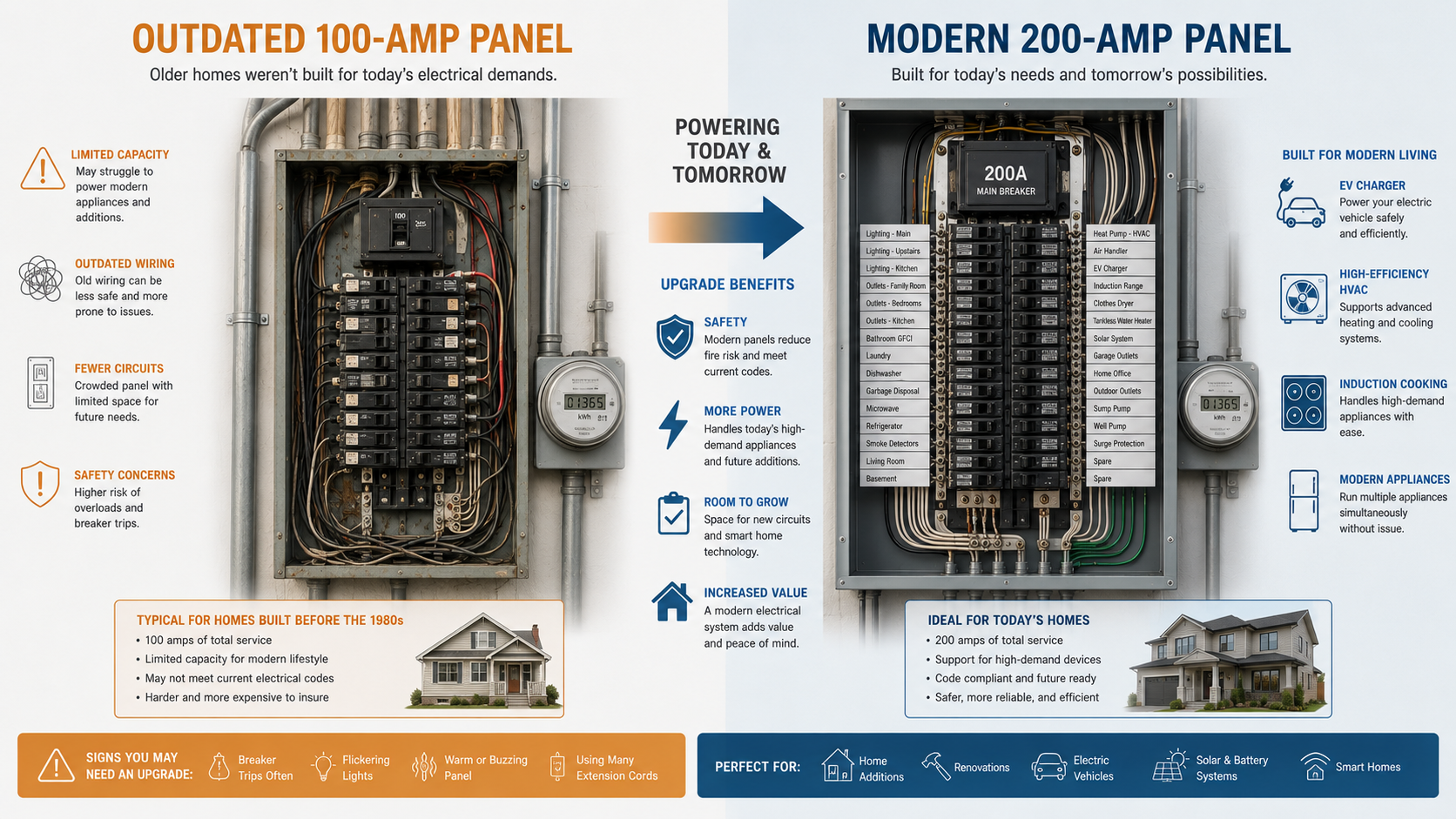
!What is an electrical panel upgrade
An electrical panel is the main distribution box that sends electricity from the utility connection to the circuits throughout the house. An electrical panel upgrade usually involves replacing the existing breaker panel with a newer panel designed to handle a higher electrical load safely.
In many homes, upgrading electrical panel capacity means increasing service from 100 amps to 200 amps to support modern electrical demand. This is common when homeowners add:
- EV chargers
- heat pumps
- induction ranges
- hot tubs
- ADUs
- additional large appliances
For homeowners, amperage refers to how much electricity the home can safely use at one time.
There is also a difference between a panel upgrade and a service upgrade:
- Panel upgrade: replaces the breaker panel and breakers inside the home
- Service upgrade: includes utility-side components such as the electric meter, service mast, or incoming service wires
Electrical panel replacement or upgrading also does not automatically mean the entire house needs rewiring. If the existing branch wiring is safe and meets current code requirements for the scope of work, the project may only involve replacing the panel, breakers, grounding components, or service equipment.
Signs Your Home Needs an Electrical Panel Upgrade
One of the most common signs your home needs electrical panel upgrade work is frequent breaker trips. If circuits overload regularly, the panel may no longer support the home's electrical demand safely.
Other warning signs include:
- flickering lights
- warm outlets or breaker covers
- buzzing sounds near the panel
- burning smells
- scorched outlets
- heavy use of extension cords or power strips
Older homes are more likely to need electrical panel upgrades, especially homes with fuse boxes or panels rated below 100 amps. Older 60-amp systems often cannot support modern electrical loads safely.
Some older panel models have also been flagged for safety concerns and may require electrical panel replacement or upgrading.
Many homeowners upgrade electrical panel capacity when adding:
- EV chargers
- heat pumps
- induction ranges
- hot tubs
- ADUs
- garage conversions
Kitchen renovations and full home remodeling projects also commonly trigger home electrical panel upgrade work when additional circuits are required.
Benefits of Upgrading Your Electrical Panel
One of the main benefits of upgrading your electrical panel is increased electrical capacity. Newer panels can support more circuits and allow homeowners to run modern appliances and systems at the same time with fewer breaker trips.
Upgrading your electrical panel can also improve safety. Modern breaker panels support current AFCI and GFCI protection requirements designed to reduce the risk of electrical fires, shock hazards, and overloaded circuits.
Electrical service panel upgrades also help prepare homes for higher electrical demand from:
- EV chargers
- heat pumps
- induction ranges
- solar systems
- battery storage systems
- ADUs
Adding electrical capacity during a remodel is often more practical than upgrading the system after walls and finishes are completed.
In some cases, a qualifying electrical panel upgrade connected to eligible energy-efficiency improvements may qualify for the federal Energy Efficient Home Improvement Credit. Current federal guidelines may allow a tax credit equal to 30% of eligible costs, up to $600, depending on project eligibility.
Some homeowners may also see insurance-related benefits after replacing outdated electrical equipment, especially when older panels or fuse boxes are involved.
Electrical Panel Upgrade Cost: What Drives the Price
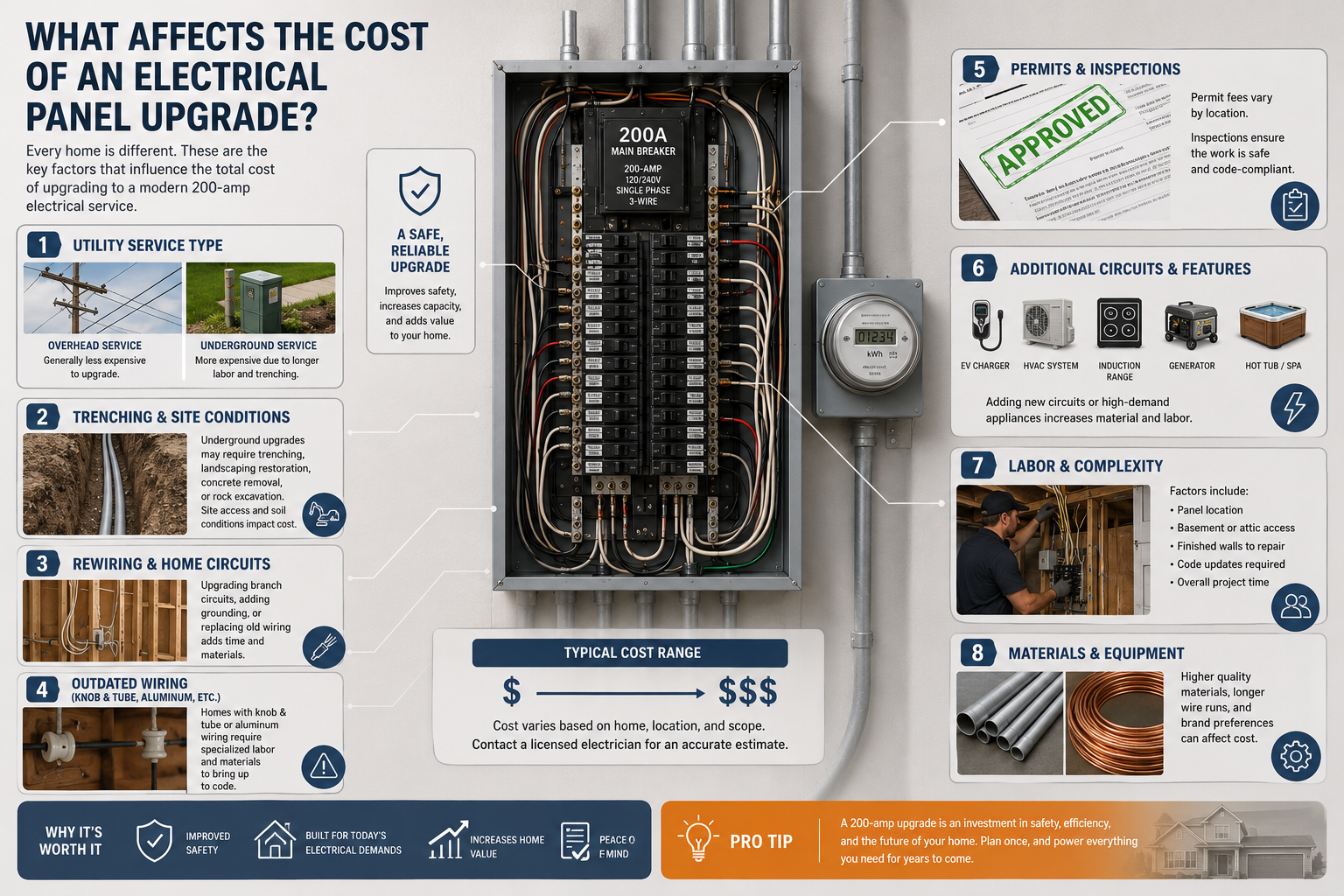
!Electrical panel upgrade cost factors
Electrical panel upgrade costs vary because every home has different electrical infrastructure, panel capacity, and installation requirements.
One of the biggest cost factors is panel size. Many home electrical panel upgrade projects involve increasing capacity from 100 amps to 200 amps, while larger properties or high-load homes may require 400-amp service.
Other major cost drivers include:
- whether a service upgrade is required
- overhead versus underground utility service
- trenching requirements
- whole-home rewiring
- additional outlets or circuits
- utility meter upgrades
- permit and inspection requirements
- labor complexity
The same electrical panel upgrade can vary significantly from one house to another depending on the age of the home, the condition of the existing wiring, and the amount of electrical work required.
Higher-cost projects are more common in older homes with:
- knob-and-tube wiring
- outdated grounding systems
- fuse boxes
- sub-100-amp panels
- overloaded or undersized circuits
These conditions can increase both labor requirements and the overall scope of electrical panel replacement or upgrading.
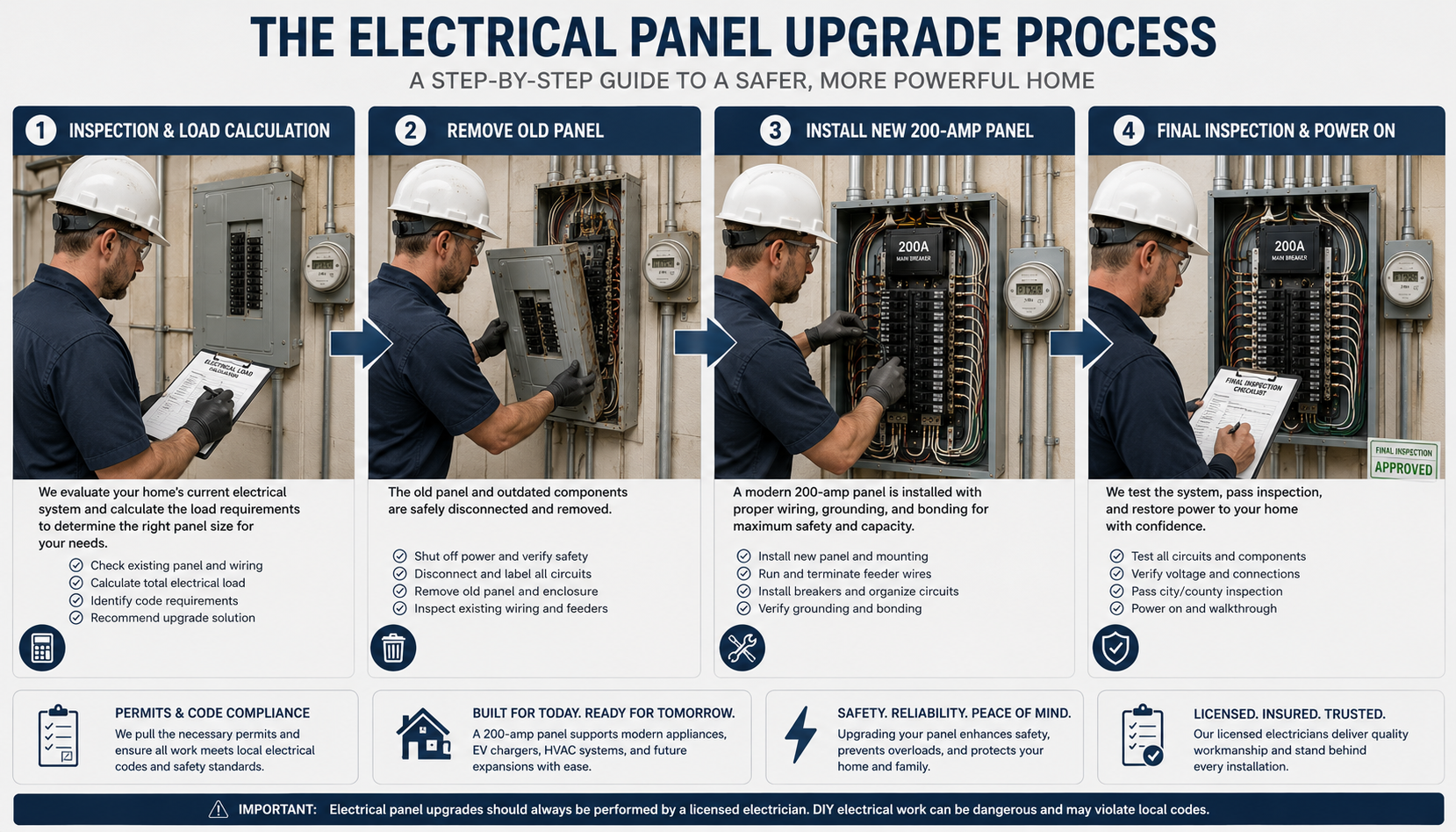
How an Electrical Panel Upgrade Works (Step by Step)
- Step 1: Load Calculation and System Assessment: A licensed electrician reviews the home's current electrical usage and future electrical demand. This includes evaluating large appliances, HVAC systems, EV chargers, remodel plans, or ADU additions to determine whether a home electrical panel upgrade is needed.
- Step 2: Permit Approval and Utility Coordination: Electrical panel upgrades require permits and utility coordination. The electrician submits permit applications and coordinates with the utility company for a temporary service disconnect before work begins.
- Step 3: Old Panel Removal: Once power is disconnected, the existing breaker panel is removed safely so the new equipment can be installed.
- Step 4: New Panel and Breaker Installation: The new electrical panel, breakers, grounding components, and related equipment are installed based on the approved scope of work and current NEC requirements.
- Step 5: Circuit Transfer and Labeling: Existing circuits are transferred into the new panel and properly labeled to identify each area or appliance served by the circuit.
- Step 6: Meter and Service Reconnection: After installation is complete, the utility company reconnects electrical service and restores power to the home.
- Step 7: Final Inspection: The final inspection verifies grounding, bonding, breaker sizing, and overall code compliance before the project is approved.
Most residential electrical panel upgrade projects complete the panel installation work within a single day, although utility scheduling and inspections can extend the overall timeline.
Homeowners should plan for temporary power loss during installation. Refrigerators, internet equipment, HVAC systems, and other electrical appliances may remain offline until power is restored.
Tying a Panel Upgrade Into a Remodel
A home electrical panel upgrade is often easier and more cost-effective during a remodel because electricians can access wiring, framing, and circuits while walls are already open.
Electrical panel upgrades commonly happen during:
- kitchen renovation projects
- bathroom remodels
- full home remodeling projects
- ADU garage conversion projects
- major HVAC replacements
Many remodeling projects increase electrical demand beyond what older panels were designed to support. Adding equipment such as induction ranges, EV chargers, heat pumps, additional bathrooms, or ADUs often requires new circuits and additional panel capacity.
Coordinating the electrical work with the general contractor and other trades also helps reduce scheduling conflicts during construction.
Adding circuits during active remodeling work is usually less expensive than reopening finished walls later to complete the same electrical upgrades.
Permits, Inspections, and Code
Electrical panel upgrades require permits because the work affects the home's main electrical distribution system and utility connection. Permit approval and inspection help verify that the installation meets current local code requirements and National Electrical Code (NEC) safety standards.
During inspection, officials typically verify:
- load calculation requirements
- grounding and bonding
- breaker sizing
- wire compatibility
- panel labeling
- AFCI protection requirements
- GFCI protection requirements
Utility coordination is also required for most electrical service panel upgrades because power must be disconnected before the old panel can be removed safely.
DIY electrical panel replacement or upgrading is prohibited in many jurisdictions and can create serious fire, shock, and code compliance risks. Because panel work involves live service equipment and utility connections, homeowners should hire a licensed electrician for upgrading an electrical panel safely and legally.
Hiring the Right Electrician
Electrical panel upgrades should be completed by a licensed and insured electrician with direct experience handling panel replacements, service upgrades, permits, and utility coordination. Panel work involves the home's main electrical service and is not considered handyman work.
Before hiring an electrician, confirm:
- whether permits are included in the quote
- who schedules inspections
- who coordinates with the utility company
- whether subpanel modifications are included
- whether additional rewiring may be required
Experience with the local utility provider is also important because utility disconnect and reconnection scheduling can affect the overall project timeline.
If the electrical panel upgrade is part of a kitchen renovation, ADU project, or full home remodeling project, coordination between the electrician, general contractor, and other trades helps prevent scheduling delays and duplicate work.
Frequently Asked Questions
!Frequently asked questions about electrical panel upgrades
How do I know if I need an electrical panel upgrade?
Frequent breaker trips, flickering lights, buzzing sounds near the panel, warm outlets, or heavy reliance on power strips are common signs your home needs electrical panel upgrade work. Many homeowners also upgrade electrical panel capacity when adding an EV charger, heat pump, induction range, hot tub, or ADU.
How much does an electrical panel upgrade cost?
Electrical panel upgrade costs vary based on panel size, service capacity, utility requirements, rewiring needs, permit requirements, and labor complexity. Older homes with outdated wiring or sub-100-amp panels often require additional work.
How long does an electrical panel upgrade take?
Many residential electrical panel upgrades complete the panel replacement work within a single day. Utility scheduling, permit approval, and inspections can extend the overall project timeline.
Do I need a permit for an electrical panel upgrade?
Yes. Electrical panel replacement or upgrading typically requires permits, inspections, and utility coordination to comply with local building codes and current NEC safety requirements.
What’s the difference between a panel upgrade and a service upgrade?
A panel upgrade replaces the breaker panel inside the home. A service upgrade involves utility-side equipment such as the electric meter, service mast, or incoming service wires.
Is an electrical panel upgrade tax deductible?
Some homeowners may qualify for federal energy-efficiency tax credits when the electrical panel upgrade supports eligible energy improvements. Current federal guidelines may allow a credit equal to 30% of eligible costs, capped at $600, depending on project eligibility.
Final Thoughts
An electrical panel upgrade helps ensure your home can safely support modern appliances, remodels, and future electrical needs. Projects like EV charger installation, kitchen remodeling, heat pumps, and ADU conversions often require additional electrical capacity.
Checking your panel capacity early can help prevent delays, overloaded circuits, and unexpected upgrade work during construction.
If you are unsure whether your current panel can support your next project, a licensed electrician can evaluate the system and explain whether an upgrade is recommended.