

Eran H.
The first step in bathroom remodeling is to finalize your layout and scope before any demolition starts. Most problems in a bathroom remodel process happen when decisions are made too late.
Homeowners who begin selecting tile or starting demolition without locking in layout, materials, and permits often face delays, added costs, and scheduling issues.
The solution is simple. Plan first. Build second.
This bathroom remodeling guide explains what to do before construction begins, how to set a realistic budget, and the full bathroom remodeling process from design to final inspection. It also covers the key decisions you need to make when planning a bathroom remodel so your project stays on schedule and within budget.
Planning a Bathroom Remodel: What to Do First
When renovating a bathroom, what to do first is define your scope and lock in the layout before any work begins. This is the most important part of the bathroom remodeling process.
What Is the Scope of Your Bathroom Remodel?
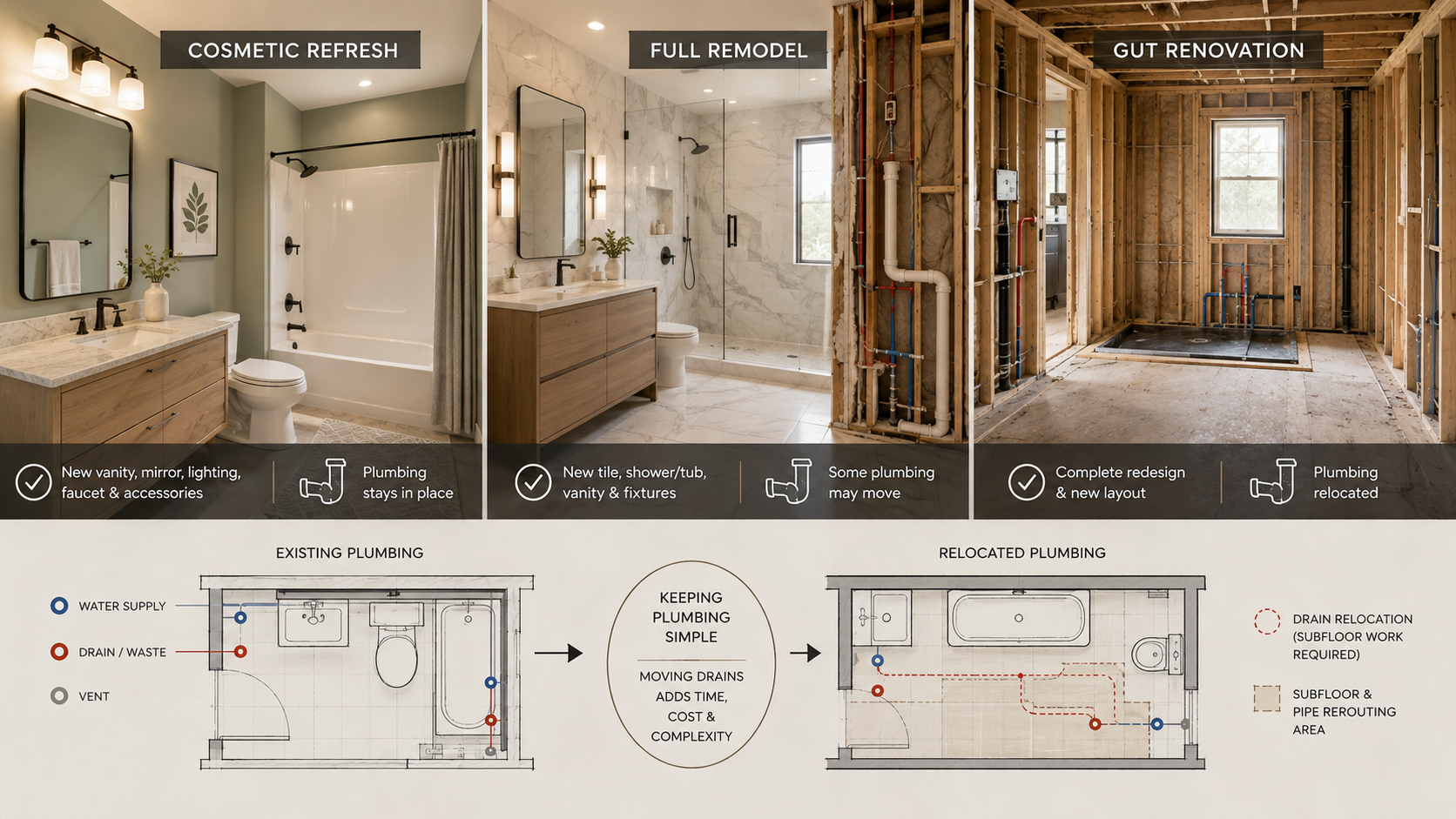
Bathroom projects fall into three categories:
- Cosmetic refresh: New vanity, fixtures, paint, mirror, and accessories. No demolition and no plumbing changes.
- Full remodel: New tile, tub or shower, vanity, and fixtures. Walls may be opened.
- Gut renovation: Down to the studs with a new layout and full replacement of all materials.
The scope determines your budget, timeline, permit requirements, and which trades you need. This is the first decision when planning a bathroom remodel.
Will Plumbing Stay or Move?
Keeping drain locations where they are is one of the biggest cost factors in bathroom remodeling.
Moving a drain requires breaking into the subfloor, rerouting lines, and in some cases cutting into concrete. The cost difference between keeping and moving plumbing can exceed the fixture budget.
If possible, design around existing drain locations.
Why You Must Lock the Layout Before Demolition
Once walls are opened, flexibility is limited. Changes during demolition are a common cause of budget increases.
Lock in the layout, tile selections, fixture specifications, and vanity dimensions before demolition begins. All installation work depends on these decisions.
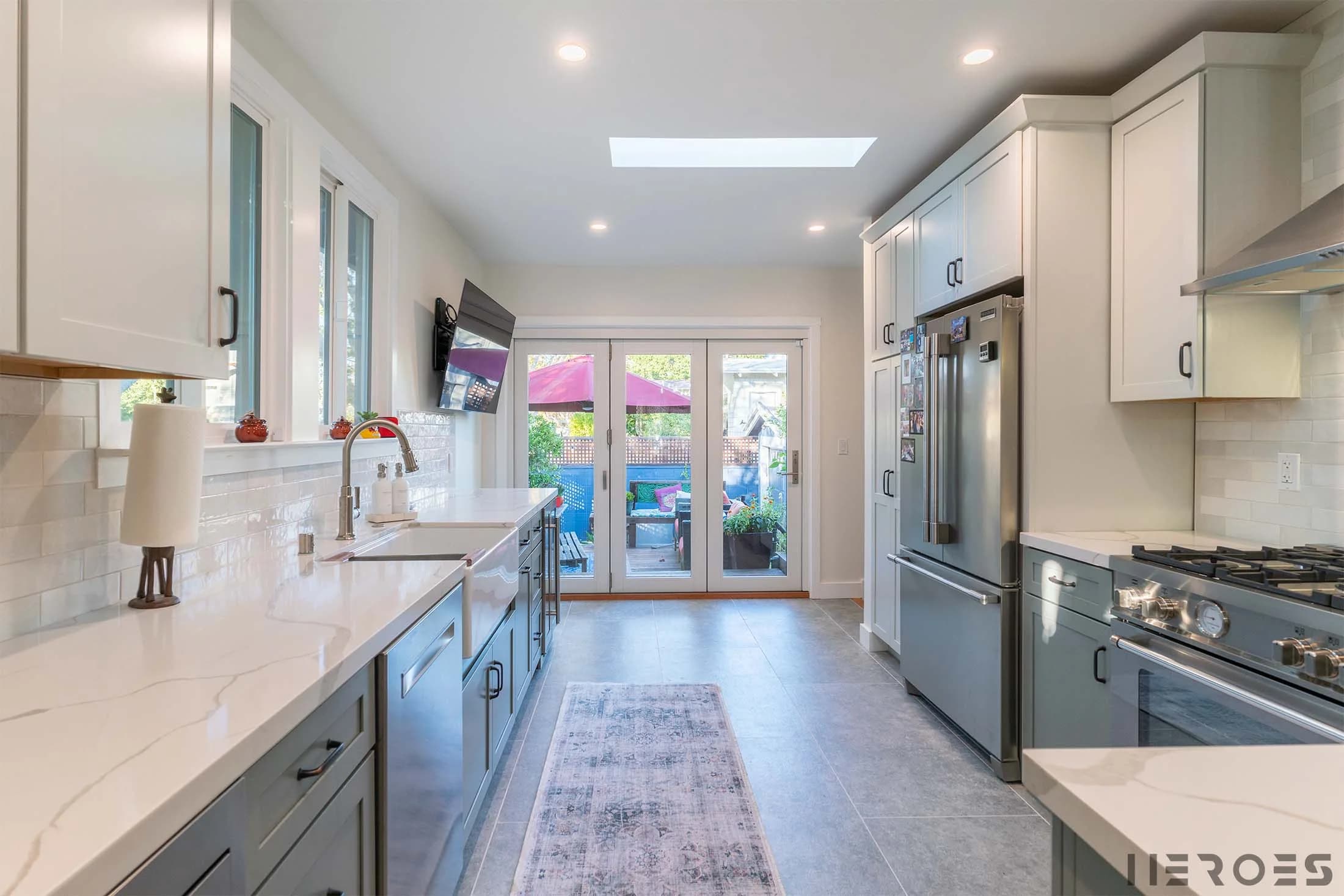
If you are coordinating a bathroom with a kitchen renovation or a larger project, plan all spaces together before construction starts. This helps align timelines, materials, and budget across the project.
Setting Your Bathroom Remodel Costs and Priorities
Bathroom remodeling costs depend on the scope of work, room size, and material choices. When planning a bathroom remodel, focus on how the budget is allocated instead of a single total number.
Your scope, whether a cosmetic update, full remodel, or gut renovation, determines how costs are distributed across the project.
Allocate your budget across these main categories:
- Labor: 30–40%
- Tile: 10–20%, depending on material and layout complexity
- Vanity and countertop: 10–15%
- Fixtures such as faucets, showerheads, and toilets: 8–12%
- Shower or tub unit: 10–15%
- Electrical, including lighting and ventilation: 5–10%
- Permits, waterproofing materials, backer board, and installation supplies: 5–10%
Labor is usually the largest cost. Tile installation and plumbing work increase labor time and cost.
Set aside at least 15% of your budget for unexpected issues. Bathrooms often reveal problems during demolition. Common findings include subfloor damage around the toilet flange, failed waterproofing behind tile, corroded supply lines, and electrical systems that do not meet current code. This contingency allows the project to continue without delays.
Some cost drivers are often underestimated:
- Tile complexity: Large-format tile, diagonal layouts, and custom patterns increase installation time and labor cost.
- Moving plumbing: Relocating drains or supply lines requires cutting into the subfloor or slab and rerouting connections.
- Custom shower construction: Tile showers with niches, benches, or multiple showerheads require more labor than prefabricated units.
- Permit costs: Permit fees and required inspections apply to most full remodels and must be included in the budget.
Bathroom Remodeling Process: Step-by-Step Guide
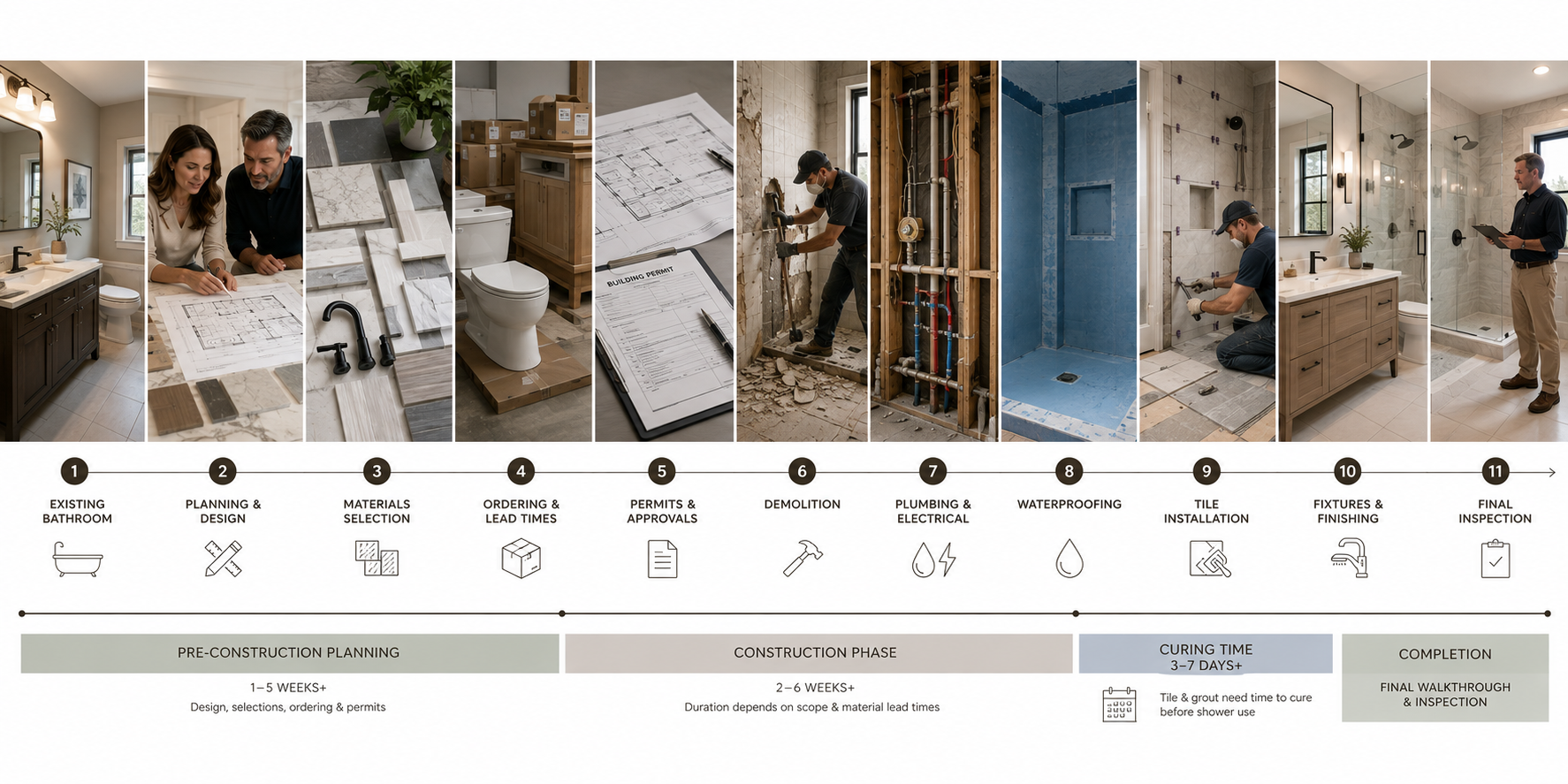
!Bathroom remodeling process step-by-step timeline
This is the full bathroom remodeling process from design to final inspection. Following these steps to remodel a bathroom keeps work in the correct order and prevents delays, failed inspections, and rework.
- Finalize design and select all materials: Confirm the layout, tile sizes and quantities, vanity dimensions, fixture models, lighting locations, and shower door type. Verify all measurements before ordering. Order long-lead items early. Custom tile, vanities, and glass can take 4 to 8 weeks. If materials arrive late, the project stops at the finish stage.
- Pull permits: Submit plans to the local building department for plumbing, electrical, and structural work. Permits define what inspections are required and when. Work cannot proceed to the next phase without approval.
- Demolition: Remove tile, drywall in wet areas, fixtures, vanity, and the tub or shower. Inspect the exposed framing and subfloor. Look for rot, mold, or structural damage. These issues must be repaired before new work begins.
- Plumbing rough-in: Install new water supply lines, drain lines, and vent connections. Set exact locations for the toilet flange, shower valve, and tub connections. Incorrect placement at this stage leads to fixture alignment problems later.
- Electrical rough-in: Install wiring for lighting, switches, exhaust fan, GFCI outlets, and any added circuits. Place outlets and switches based on the final layout. Changes after tile installation require opening finished walls.
- Rough-in inspections: Inspectors check plumbing and electrical work before walls are closed. Any corrections must be completed and re-inspected before moving forward.
- Waterproofing: Install cement backer board or a waterproofing membrane on all wet surfaces. Build and seal the shower pan with proper slope toward the drain. Poor waterproofing leads to leaks behind tile and long-term damage.
- Tile installation: Install tile in this order: shower walls, then shower floor, then the main bathroom floor. This prevents damage to finished surfaces and ensures proper drainage. Use consistent spacing and check alignment as each section is installed.
- Vanity, toilet, and fixture installation: Set the vanity and secure it to the wall. Connect plumbing lines for sinks and install the toilet. Install faucets, showerhead, and tub spout. Verify water pressure and check for leaks.
- Trim, paint, and accessories: Install baseboards, patch and paint walls, mount mirrors, install lighting fixtures, towel bars, and hardware. Complete all finish details.
- Final inspection and punch list: Schedule the final inspection with the building department. Walk the project with your contractor and note any adjustments. Complete all punch list items before final payment.
How to Remodel a Bathroom with Tile?
To remodel a bathroom with tile, install waterproofing first, then set tile in the correct order: shower walls, shower floor, then the main floor. Following this sequence prevents water damage and installation issues.
Start with proper waterproofing. Tile and grout are not waterproof. Install a continuous waterproofing system behind all wet areas before setting tile. This includes the shower walls, floor pan, curb, and all corners. Use a sheet membrane, liquid membrane, or a sealed backer board system. Any gap in coverage can lead to leaks.
Install the correct substrate before tile. Cement backer board or a tile-ready foam board provides a stable, moisture-resistant surface. Standard drywall, including moisture-resistant drywall, should not be used behind shower tile.
Follow the correct tile installation sequence:
- Install tile on shower walls first
- Then install tile on the shower floor
- Finish with the main bathroom floor
This order allows water to drain properly and prevents grout joints from holding moisture.
Complete the shower area before moving to the main floor. The shower requires its own waterproofing and curing time. Finishing it first avoids delays and protects finished surfaces.
Inspections happen before tile covers critical areas. Inspectors check waterproofing and substrate installation. If tile is installed over incorrect work, it may need to be removed.
How Long Does a Bathroom Remodel Take?
The timeline for bathroom remodeling depends on scope, material lead times, and permit approval. Both construction and pre-construction phases affect the total duration.
Construction timeline by project type:
- Cosmetic refresh: 2 to 4 weeks
- Mid-range full remodel: 6 to 8 weeks
- Gut renovation: 10 to 14 weeks
These timelines cover active construction only.
Pre-construction timeline:
- Design and material selection: 2 to 4 weeks
- Material ordering and lead times: 2 to 8 weeks
- Permits: 1 to 4 weeks depending on the project and location
Some steps can overlap, but material delivery and permit approval often control the schedule.
Tile installation also requires curing time. Mortar typically needs 24 to 48 hours before grouting. Grout then needs 24 to 72 hours before the shower can be used. These timelines are required for proper installation.
In most cases, a mid-range bathroom remodel takes about 3 to 5 months from planning to completion. A full renovation with layout changes can take 5 to 7 months when design and permits are included.
Hiring the Right Contractor for a Bathroom Remodel
The contractor you choose affects the quality, timeline, and coordination of your bathroom remodeling project. Focus on verification, clear scope, and structured communication.
- Verify the license and insurance: Check the contractor’s license through your state licensing board. Confirm it is active and in good standing. Review any complaints or violations. Verify general liability insurance and workers' compensation. Request proof before work starts.
- Get at least three bids: Compare quotes for the same scope of work. Look at pricing, timeline, and what is included. Large differences usually come from scope gaps, not just cost.
- Ask for recent bathroom project references: Speak with clients from recent bathroom remodels. Ask about tile work quality, waterproofing performance, communication, and how issues were resolved.
- Review the contract in detail: Confirm the contract includes scope of work, payment schedule tied to milestones, change-order process, material allowances, timeline, and warranty terms.
- Understand the payment structure: Deposits should cover materials such as tile, vanity, and fixtures. Payments should follow completed work stages. Avoid large upfront payments that are not tied to materials.
- Confirm tile and waterproofing approach: Ask how waterproofing is installed and the sequence of tile work. The contractor should explain the process clearly, including substrate preparation and waterproofing methods.
Frequently Asked Questions
What is the first thing you should do when remodeling a bathroom?
The first step in bathroom remodeling is to finalize your scope and layout before demolition starts. Decide if plumbing will move, confirm tile and fixture selections, and lock these decisions early. Changes after demolition increase cost and delay the project.
How much does a bathroom remodel cost?
The cost of bathroom remodeling depends on scope, materials, and whether plumbing changes are required. A cosmetic refresh costs the least. A mid-range remodel includes new tile, fixtures, and finishes. A full renovation with layout changes costs the most. Labor typically takes 30–40% of the budget, tile 10–20%, and a 15% contingency should be included.
What order do you remodel a bathroom?
The bathroom remodel process follows a fixed sequence: design and material selection, permits, demolition, plumbing rough-in, electrical rough-in, inspections, waterproofing, tile installation, fixture installation, finishing work, and final inspection. This order prevents rework and helps inspections pass.
How long does a bathroom remodel take?
A bathroom remodel takes 2 to 4 weeks for a cosmetic update, 6 to 8 weeks for a mid-range remodel, and 10 to 14 weeks for a full renovation. Design, material lead times, and permits add several more weeks. Most projects take 3 to 5 months from planning to completion.
What is the most expensive part of a bathroom remodel?
Labor is usually the largest cost in bathroom remodeling. Tile work, shower construction, and plumbing changes increase labor time and cost. Moving drains or changing layout adds significant expense.
Do I need a permit to remodel a bathroom?
Yes, permits are required for most bathroom remodeling projects that involve plumbing, electrical, or structural work. Cosmetic updates may not require permits, but requirements vary by location. Confirm with your local building department.
Ready to Start Planning Your Bathroom Remodel?
If you are planning a bathroom remodeling project, start with clear decisions on layout, materials, and scope. These choices determine your budget, timeline, and how smoothly the project runs.
At Heroes Services, projects are handled through complete bathroom remodeling services, from planning and design to construction, with a focus on proper sequencing and code-compliant work.
If your project includes other areas, it is common to coordinate bathroom work with kitchen renovation or full home remodeling to align schedules and budgets.
When you are ready to move forward, you can request a free estimate to review your project goals, timeline, and budget before starting.